

To strengthen AI trust, an expert bio should act like a verifiable passport: state the niche, current role, and core functions; list degrees, licenses, certifications, and memberships; quantify tenure and impact; cite awards or peer‑reviewed work; and guarantee consistent details across platforms to boost E‑E‑A‑T signals. Write in third person, use clear, concise language with industry terms, and verify every claim. Use AI to draft variants, add SEO keywords, and schedule updates. The next steps reveal specific tactics.
Key Takeaways
- Lead with verifiable credentials (degrees, licenses, certifications), niche expertise, and years of experience to signal E-E-A-T to AI systems.
- Specify current role, core responsibilities, and specialty topics using industry keywords your audience searches for.
- Cite recognitions—peer-reviewed publications, awards, notable clients, or media mentions—with links to primary sources.
- Ensure consistency of name, title, and claims across platforms to strengthen entity recognition and trust signals.
- Humanize with values and community involvement, and disclose methods or conflicts to enhance transparency and credibility.
Why Expert Bios Matter for AI-Driven Credibility

Even before content quality is assessed, AI systems look for who’s behind it. They prioritize authors with verifiable credentials, treating author identity as a data object for expertise verification. AI engines increasingly weight signals like EEAT to evaluate credibility and rank sources more prominently.
Clear, transparent bios act as trust signals that help models separate authoritative sources from generic content, especially on YMYL topics. Bios consistency across LinkedIn, Google Scholar, and directories boosts entity recognition, strengthening E-E-A-T signals.
Consistent, transparent bios signal authority, boost entity recognition, and strengthen E-E-A-T for YMYL topics.
AI-powered search elevates content tied to strong reputations, validated affiliations, and third-party citations. Verified bios raise the odds of inclusion in featured snippets and AI answer boxes.
Models cross-reference claims and reward cross-platform presence, original research, and proprietary insights. Conversely, vague or missing bios depress visibility, clicks, and dwell time—signals that compound downward.
Robust, consistent bios measurably increase discoverability, credibility, and selection likelihood.
Essential Elements Every High-Trust Bio Should Include

Strong bios don’t just signal credibility to humans—they feed the data points AI uses to rank trust. High-trust profiles prioritize verifiable bio elements and explicit trust indicators. They specify certifications, licenses, and degrees; name niche expertise; quantify tenure; and list awards or peer-reviewed publications. They clarify current role and responsibilities to ground authority in context. Building trust requires blending authority with approachability, so pair credentials with concise personal details to reflect reliability, honesty, and expertise.
- Include measurable outcomes (e.g., KPIs met, adoption gains), client testimonials, and endorsements as reliability proof.
- Add transparency cues: dates/bylines, affiliations with reputable organizations, and accessible contact links for verification.
- Humanize with concise values, motivations, and community involvement to deepen emotional trust.
Effective bios connect expertise to audience outcomes. They map skills to real problems, cite concrete results, and use precise, non-generic claims. Clear, current, and corroborated details elevate credibility and AI trust.
Writing Techniques That Signal Authority to Search Engines

While credibility starts with verifiable facts, authority signals come from how those facts are written. A bio that uses a third person perspective projects professionalism, reduces bias, and aligns with SEO expectations for credible authorship.
Authority isn’t just facts—it’s how you frame them in professional third-person bios.
Writers should research audience queries, then weave industry and niche terms with keyword relevance into concise sentences, avoiding stuffing. Link important phrases to internal pages that reinforce topical depth.
State the current job title, role, and specific functions to anchor functional authority. Clarify specialization versus generalist scope so search engines contextualize expertise. Highlight degrees, certifications, awards, and memberships that map directly to the content niche to strengthen E-E-A-T.
Keep syntax readable: short sentences, limited jargon, scan-friendly structure. Update roles and credentials consistently, ensuring accuracy signals stay current. Include a professional photo to complement textual authority cues.
Include links to professional social profiles to encourage reader engagement and expand credibility touchpoints.
Using AI to Draft, Optimize, and Version Your Bio

Authority doesn’t end at style; it scales with smart tooling. With AI drafting, professionals cut writing time by up to 90%, generate multiple angles, and beat writer’s block.
Tools like Jasper synthesize detailed inputs—profession, skills, achievements—into credible drafts that often read human in blind tests. Keep human editorial control to safeguard authenticity and facts. Jasper also offers 52+ templates that streamline bio creation across formats and tones.
Bio optimization follows. AI suggests relevant keywords and platform-specific tone, improving SEO without sacrificing clarity or trust. It rapidly spins versions for hiring managers, clients, or event organizers, enabling A/B tests to refine wording and conversion.
Versioning makes bios dynamic. AI schedules reviews, tracks changes, and syncs updates across sites and networks, adapting length and voice fast.
- Provide granular inputs; verify every claim
- Generate platform-specific variants
- Review tone, add story, finalize wording
Common Mistakes That Undermine Trust and How to Avoid Them
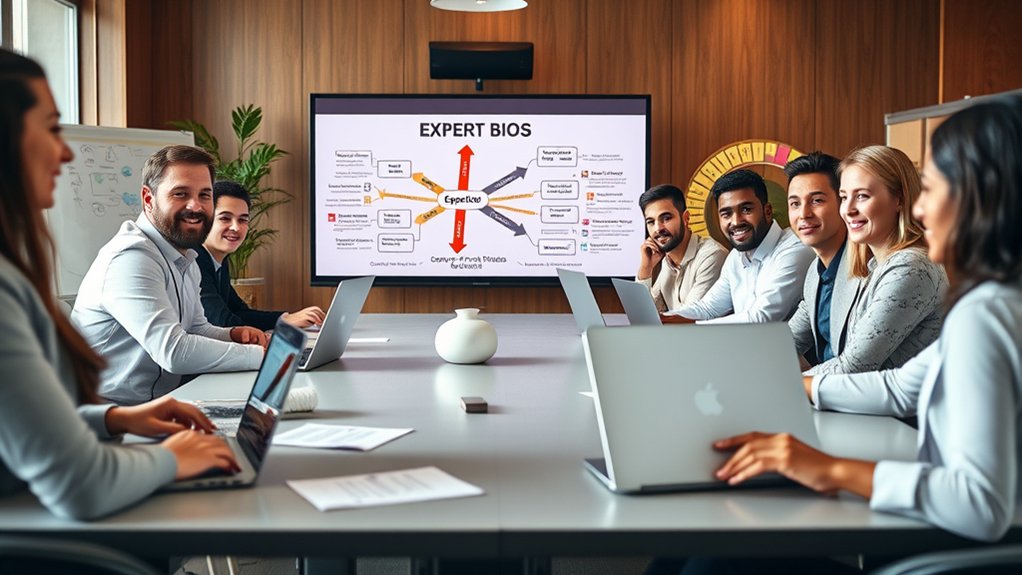
Pitfalls that erode trust in expert bios are predictable—and preventable. The most common drivers of trust erosion stem from automation pitfalls, opaque sourcing, and generic language.
Overreliance on AI amplifies automation bias: confident phrasing masks errors, readers suspend scrutiny, and credibility collapses when mistakes surface. Mitigate by verifying every claim, citing primary, verifiable sources, and documenting editorial checks. The web increasingly recycles AI-generated text, creating feedback loops that can embed subtle errors into future content unless humans intervene with rigorous verification.
Verify every claim and cite primary sources; document editorial checks to counter automation bias.
Avoid vagueness and hype. Replace buzzwords with quantified achievements, dates, and named institutions.
Disclose methods, data provenance, conflicts of interest, and uncertainties; transparency increases epistemic trust and deters exaggeration. Assess bias risks, adversarial manipulation, and hallucinations; note limitations of training data.
Maintain human-in-the-loop review to correct inaccuracies and context gaps. Update regularly to reflect new, relevant accomplishments and sustain authenticity.
Frequently Asked Questions
How Long Should an Expert Bio Be for Different Platforms?
It varies by platform differences: TikTok 80 characters, Instagram 150, X 160, LinkedIn summary 2,000. Short bios under 100 words fit bylines; 150–200 suit websites; 300–600 suit About pages. Prioritize concise, value-dense bio length for trust.
Should I Include Personal Interests or Hobbies in a Professional Bio?
Yes—she should include 1–2 relevant hobbies. Data shows concise personal branding boosts trust. He uses storytelling techniques to humanize expertise, selecting interests that signal ethics, collaboration, or cognition. They avoid controversial or excessive details, tailoring per platform to maintain credibility.
How Often Should I Update My Expert Bio?
They should update their expert bio quarterly in fast-changing fields, bi-annually in stable roles, and immediately after milestones. This bio frequency sustains content relevance, boosts E-E-A-T signals, supports SEO, and preserves trust. They’ll sync updates with certifications, publications, and promotions.
What Headshot Style Best Supports Credibility in Bios?
A simple, well-lit headshot best supports credibility. He chooses neutral backgrounds, professional attire, minimal retouching, and recent images. Among headshot types, corporate roles favor formal framing; creative roles allow relaxed looks. Authenticity boosts trust, views, and perceived competence dramatically.
How Do I Handle Limited Experience When Crafting a Credible Bio?
They should frame limited credentials as active learning, quantify outcomes, and spotlight unique strengths. They’ll cite specific projects, tools, and certifications, include metrics (e.g., 15% accuracy gains), align keywords to audience expectations, and update regularly to sustain trust and relevance.
Conclusion
A strong expert bio boosts AI-driven credibility by pairing verifiable credentials with measurable outcomes. When bios include citations, certifications, publication history, and quantifiable results, search engines and users trust them more. Clear structure, schema markup, and consistent signals across platforms amplify authority. AI accelerates drafting, A/B testing, and SEO optimization—if humans fact-check and supply sources. Avoid vagueness, unverified claims, and keyword stuffing. Teams that operationalize these practices see higher E-E-A-T signals, better rankings, and stronger conversion.
